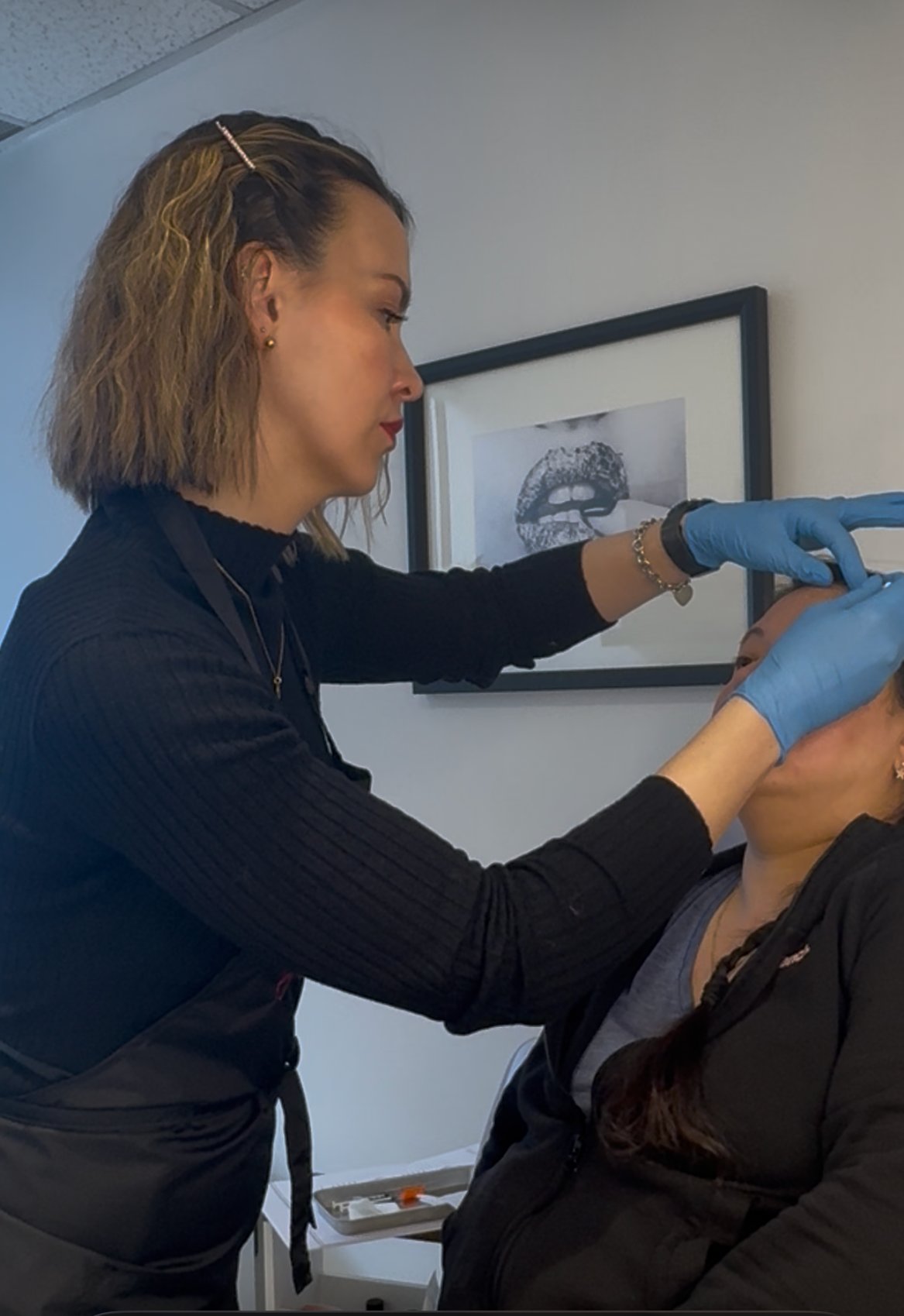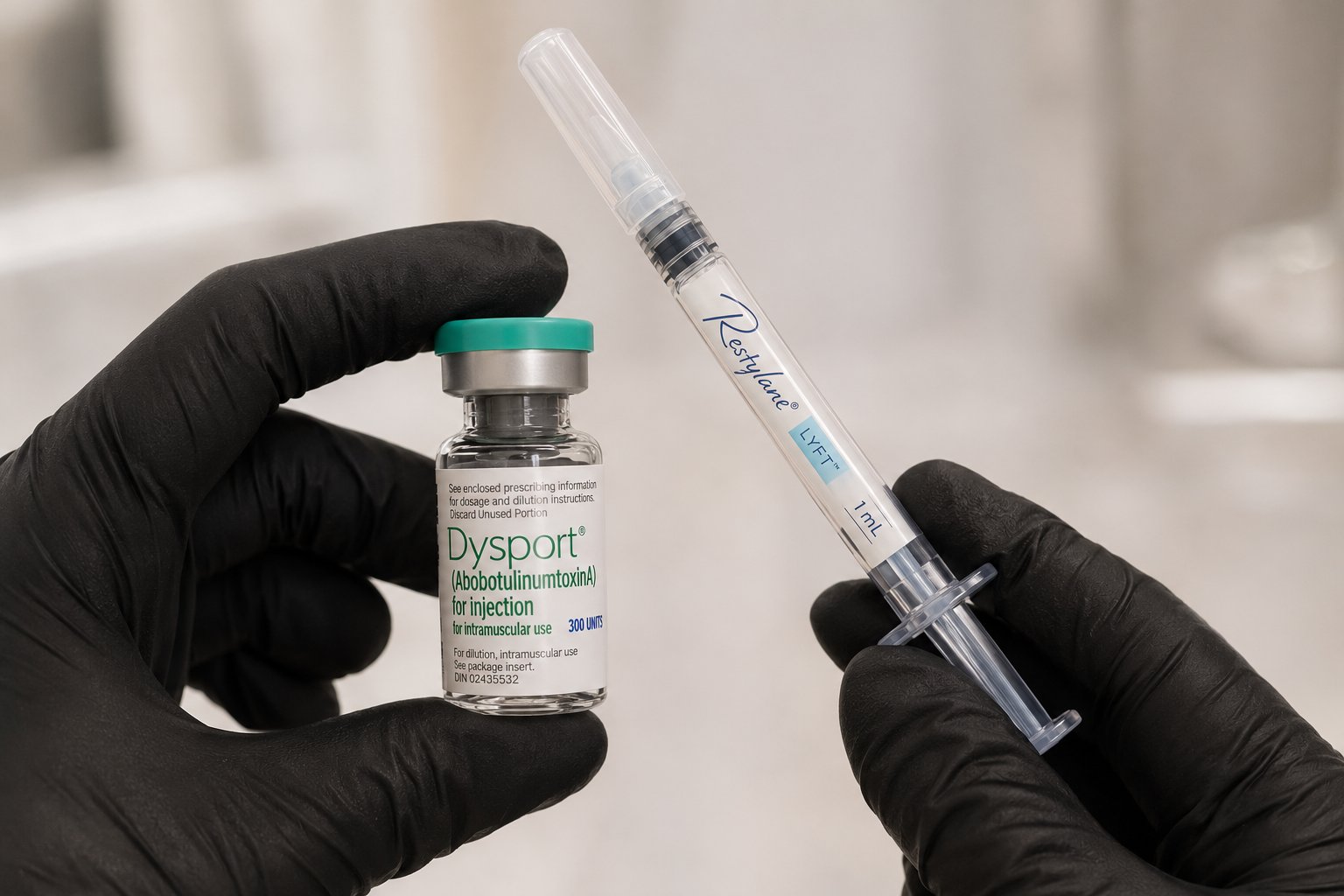

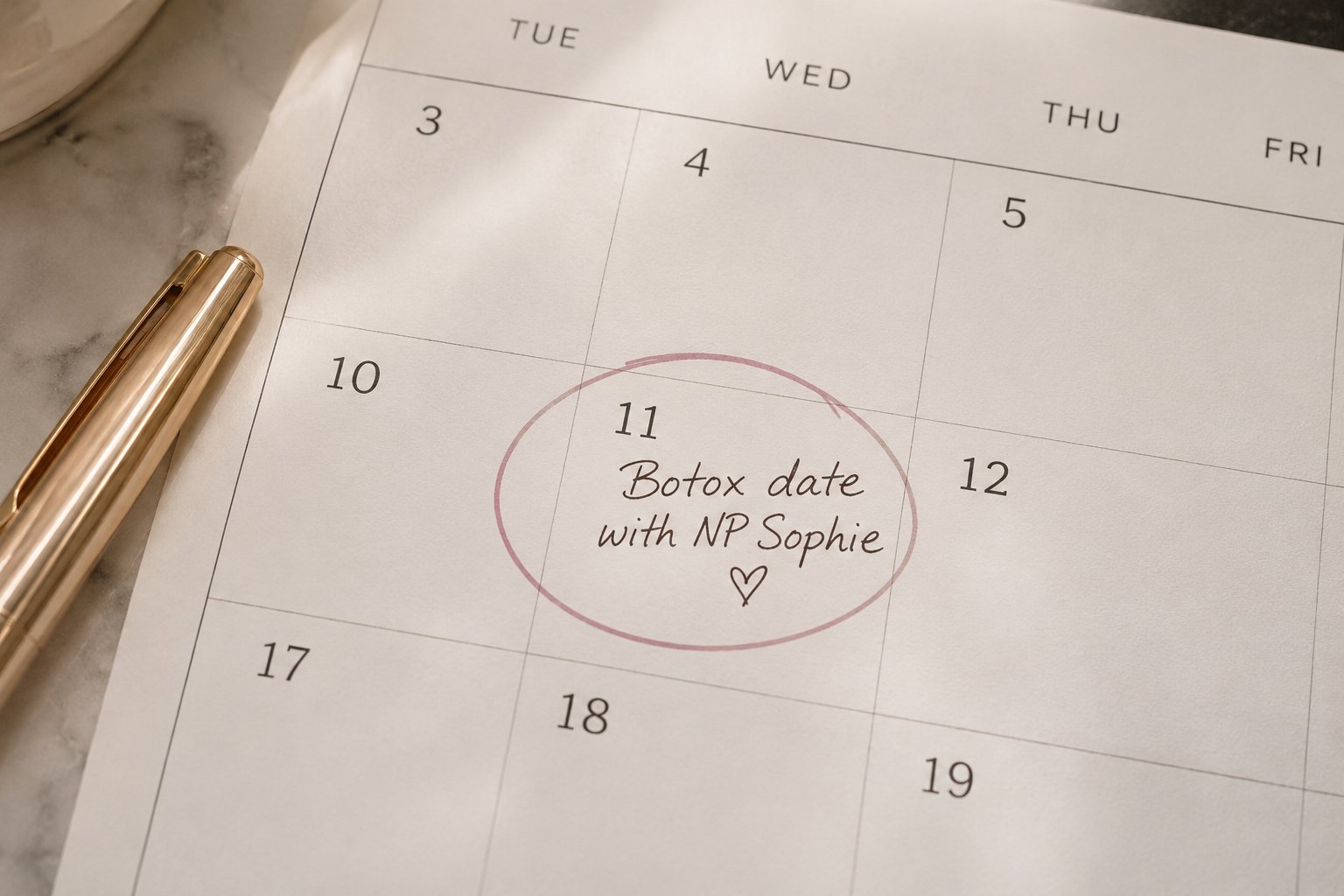
For most people, Botox lasts about three to four months. Results appear within 3 to 14 days, then movement slowly returns as the effect wears off, so many people plan their next appointment around the three- to four-month mark. How often you return is up to you, and results vary from person to person.
“Botox” is the everyday name for botulinum toxin injections, so we use both terms here. This guide explains the timeline after botulinum toxin treatment, why results last longer for some people than others, how to tell when it's wearing off and how to plan maintenance that suits you.
What happens after Botox, week by week?
Botox temporarily blocks the signal that tells a muscle to contract. As the targeted muscle relaxes, the skin above it creases less and expression lines soften. The change builds gradually and fades gradually, rather than switching on and off. A typical timeline looks like this:
- The first day or two: any small bumps or redness at the injection points settle, usually within a few hours. You won't see much change yet, and that's normal.
- From about day 3: lines start to soften, and frowning or raising your brows feels a little weaker.
- By about two weeks: the full effect is usually visible. This is the right time to judge your result, and to contact the clinic if anything looks uneven.
- Around three to four months: movement gradually returns and lines begin to reappear when you make expressions. The change is slow, so it's easy to miss at first.
Why does it wear off? Over time, the connection between nerve and muscle recovers, and the muscle starts contracting normally again. Nothing switches off overnight, which is why the return of movement feels gradual and natural.
Why does Botox last longer for some people?
Three to four months is a typical range, not a fixed rule. A few things can make results last a little longer or shorter:
- The area treated. Muscles differ in size and strength, so results can fade at different times in different areas, even in the same person.
- How strong the muscles are. Very strong, active muscles, such as the jaw muscle in someone who clenches, may need treatment more often.
- Your own body. Everyone responds a little differently, which is part of why results vary.
Over time, some people find they can space appointments a little further apart, possibly because the treated muscles get used to contracting less. The evidence for this isn't strong, though, and it doesn't happen for everyone. If your results seem to fade much sooner than usual, mention it at your next visit so your plan can be reviewed.
How often should you get Botox?
There's no schedule you have to follow. If you'd like to keep a steady result, it makes sense to book when you first notice movement coming back, which for most people is around three to four months. Others prefer to let the effect wear off fully and come back when lines bother them again. Both are reasonable choices.
If you choose to maintain your results, that usually works out to three or four visits a year. Some people anchor appointments to their calendar, such as early spring, early summer and a few weeks before the holidays, then adjust from there. Your plan is tailored to your anatomy and goals, with a conservative approach that keeps natural movement, as our page on natural-looking results explains.
What isn't usually recommended is topping up again and again between visits. Treatments are typically spaced out, partly because, rarely, very frequent injections can lead the body to make antibodies that make botulinum toxin less effective. If something looks uneven once your result has settled at about two weeks, contact the clinic so Sophie can take a look.
How can you tell Botox is wearing off?
The signs are subtle at first. You might notice that:
- you can frown, raise your brows or squint more easily than you could a few weeks ago
- lines show up again when you make expressions, even though your face looks smooth at rest
- makeup starts settling into lines it used to skip
A simple tip: take photos of the same expressions, in the same light, at two weeks and again at three months. Side-by-side photos make gradual changes much easier to see than the mirror does.
Can you make Botox last longer?
There's no proven trick to stretch your results. What helps is giving your treatment a good start and looking after your skin in general:
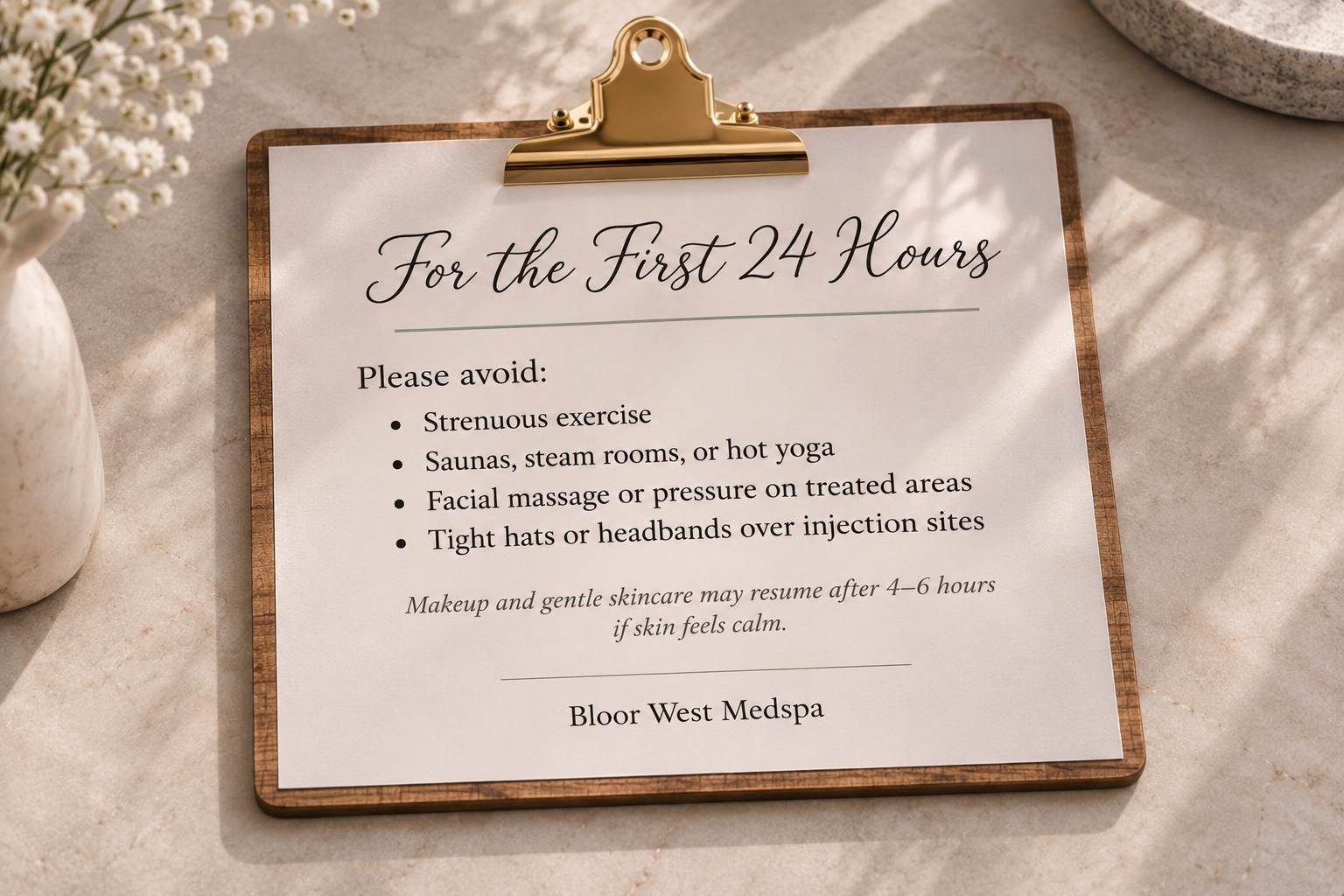
- Follow your aftercare. For the rest of the day, stay upright, skip strenuous exercise and don't rub the treated areas. Our guide to preparing for injectables and aftercare covers the details.
- Wear sunscreen every day. It won't change how long botulinum toxin relaxes a muscle, but daily broad-spectrum SPF helps protect your skin from UV damage, which can cause premature aging.
- Look after skin quality. Botox relaxes muscles, but it doesn't change skin texture or tone. Skin rejuvenation and a consistent home routine focus on those.
- Match the treatment to the concern. Lines that stay visible even when your face is relaxed, or hollows from lost volume, may need another approach. Our guide to Botox vs. dermal filler explains the difference.
Before each treatment: safety and side effects
Every new client starts with a consultation and medical assessment with Sophie Gatward, NP, and your health is checked again at each visit, because things change between appointments. Let Sophie know if you're pregnant, breastfeeding or planning a pregnancy, if you've started new medications, or if you have an infection, cold sore or rash in the treatment area. Cosmetic botulinum toxin isn't recommended during pregnancy or breastfeeding.
Side effects are usually mild: redness, small bumps or a bruise at the injection points, or a mild headache for a day or two. Uncommonly, a brow or eyelid can feel heavy or droop for a while if the product affects a nearby muscle. It's temporary and usually improves gradually as the effect wears off.
Next step: If you're new to Botox, book a consultation at our clinic at 2461 Bloor Street West, Unit 4, in Toronto's Bloor West Village. If you've had treatment before, bring the date of your last appointment and the product used, if you know it, so your plan starts from where you are. Our frequently asked questions cover booking and other basics.
Frequently asked questions
Does Botox last longer the more often you have it?
Some people find they can space treatments further apart over time, possibly because the treated muscles get used to contracting less. The evidence isn't strong, though, and it varies from person to person.
Why did my Botox wear off sooner than last time?
How long results last can vary from one treatment to the next, depending on the area treated, how strong the muscles are and how your body responds. If results fade much sooner than usual, let the clinic know so your plan can be reviewed.
Can I get more Botox before three months are up?
If something looks uneven once your result has settled at about two weeks, contact the clinic so Sophie can take a look. Otherwise, treatments are usually spaced out rather than topped up often, and Sophie can advise on timing that suits you.
Can skincare or sunscreen make Botox last longer?
Not directly. Daily sunscreen and a good routine help protect your skin and support skin quality, but they don't change how long botulinum toxin relaxes a muscle.
This article is general information, not medical advice. Every treatment at Bloor West Medspa starts with a consultation and medical assessment with Sophie Gatward, NP, to confirm what is right for you. Individual results vary.